PollinERA showing policy briefs on improving the environmental risk assessment for pesticides at COP 17
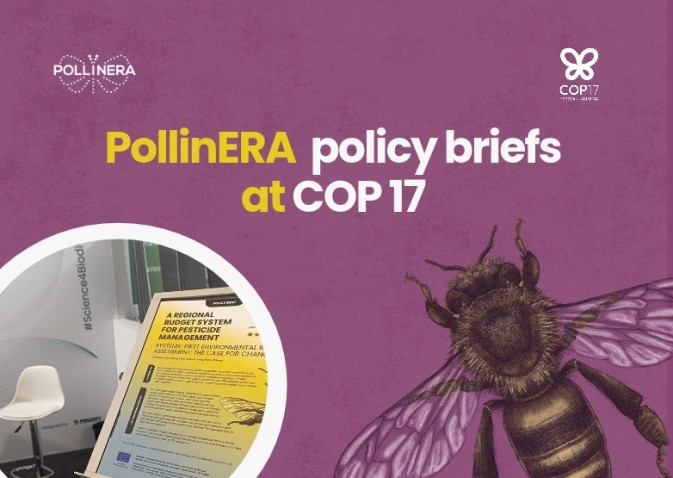
The policy briefs of the PollinERA project were displayed at the UN Biodiversity Conference CBD COP17. Between 19 and 30 October, the 17th meeting of the Conference of the Parties to the United Nations Convention on Biological Diversity (CBD COP17) brought together representatives of governments from around the world, international organisations, members of the scientific community, civil society, youth and the private sector, all seeking common ground in the interest of protecting global biodiversity in Yerevan, Armenia.
COP17 Armenia offered a historic opportunity to assess collective progress, strengthen cooperation and accelerate action to achieve the global biodiversity goals by 2030. Reversing pollinator declines is a pivotal part of protecting global biodiversity, which is why the PollinERA project found its place in the #Science4Biodiversity booth in the conference's Blue Zone. The two policy briefs of the project, ‘Reforming EU chemical risk assessment: from regulatory bottlenecks to systems solution’ and ‘A regional budget system for pesticide management systems-first environmental risk assessment: the case for change‘, gathered a lot of interest from the visitors and became a part of the conversation between stakeholders.
Supplying policymakers with evidence-based recommendations and supporting informed decision-making is one of the core PollinERA values. One of the newest project outcomes is ‘Practitioners’ perspectives on EU environmental risk assessment for plant protection products’, a joint policy brief of the PollinERA, PARC and SYBERAC projects, published in the Environmental Sciences Europe journal. It is focused on the environmental risk assessment for pesticides through practitioners’ eyes and the recommended changes in order of improving ERA's ecological efficiency and regulatory credibility while providing a safer environment for pollinators.