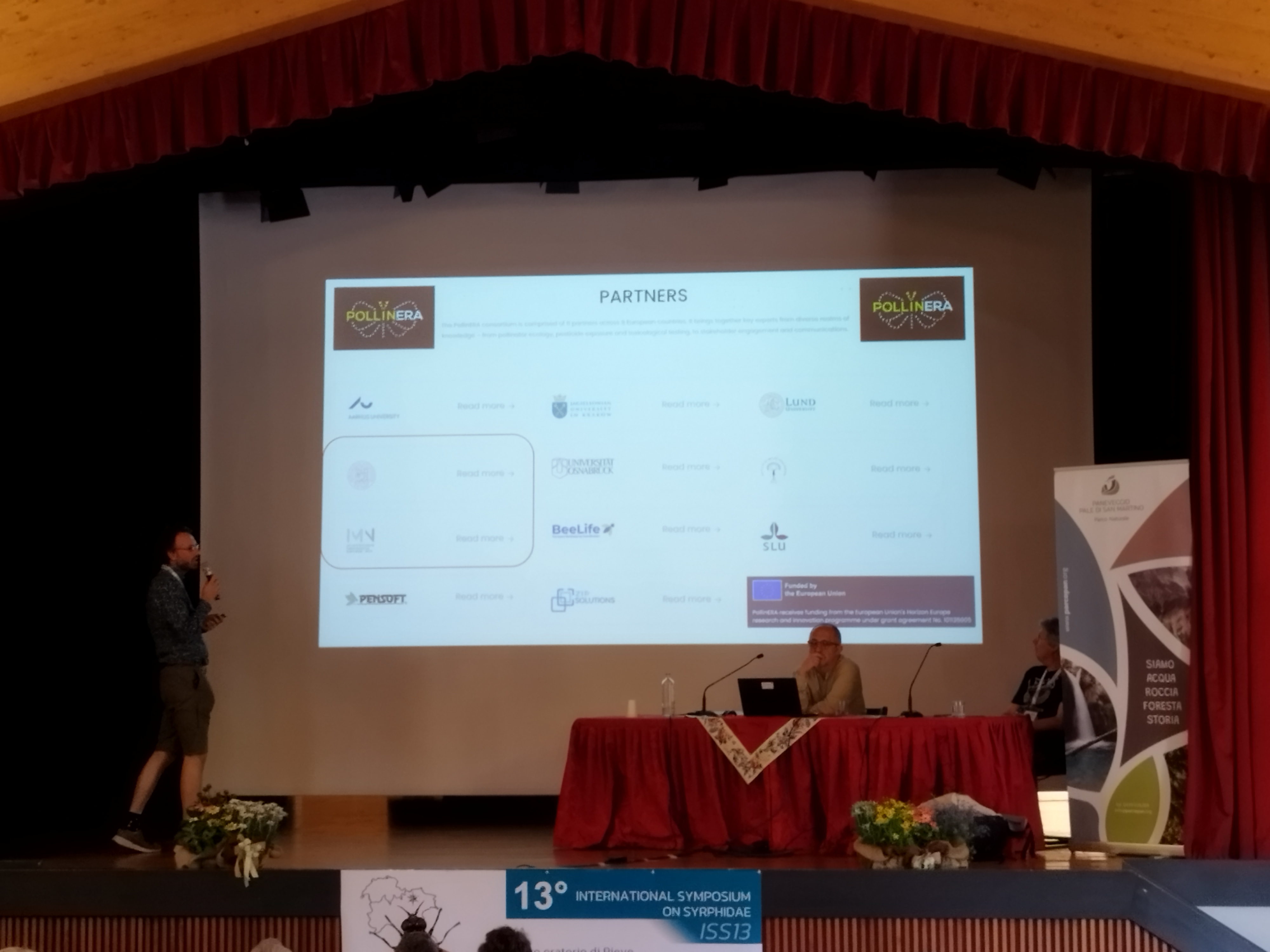
PollinERA results showcased at the 13th International Symposium on Syrphidae
The ongoing pollinator declines in Europe create the need for a new, more systematic approach to the risks and impacts of pesticides. At the moment, knowledge of pesticide toxicity to pollinators is severely lacking. Although considerable data is available for the honey bee, other pollinator species like wild bees, butterflies, moths and hoverflies are not currently included in a regulatory testing scheme.
In support of PollinERA’s mission to address this gap, the project’s work package, WP1: Pollinator exposure and sensitivity, focuses on a traits-based approach to determine species vulnerability to pesticides. This approach aims to predict exposure and sensitivity of a wide range of untested species and to identify the traits that characterise the potentially most vulnerable species for each pollinator group.
One of these species is Sphaeroephoria rueppelli, and results on its sensitivity to pesticides were presented at the 13th International Symposium on Syrphidae by Lisa Cabiddu, a PollinERA research assistant at the University of Bologna. The Symposium, organised by the Paneveggio-Pale di San Martino Nature Park, in collaboration with the University of Modena and Reggio Emilia, the University of Turin, and the Cantonal Museum of Natural History of Lugano, took place at Fiera di Primiero in the Italian Alps between 22 and 27 June 2026, bringing together researchers, entomologists, and students to discuss the study of hoverflies (Syrphidae).
Lisa took part as a speaker in the Ecosystem Services session of the Symposium with a presentation titled "A hoverfly perspective on pesticide toxicity: Sphaerophoria rueppelli". This presentation was an important contribution to the dissemination of results from PollinERA among scientists.
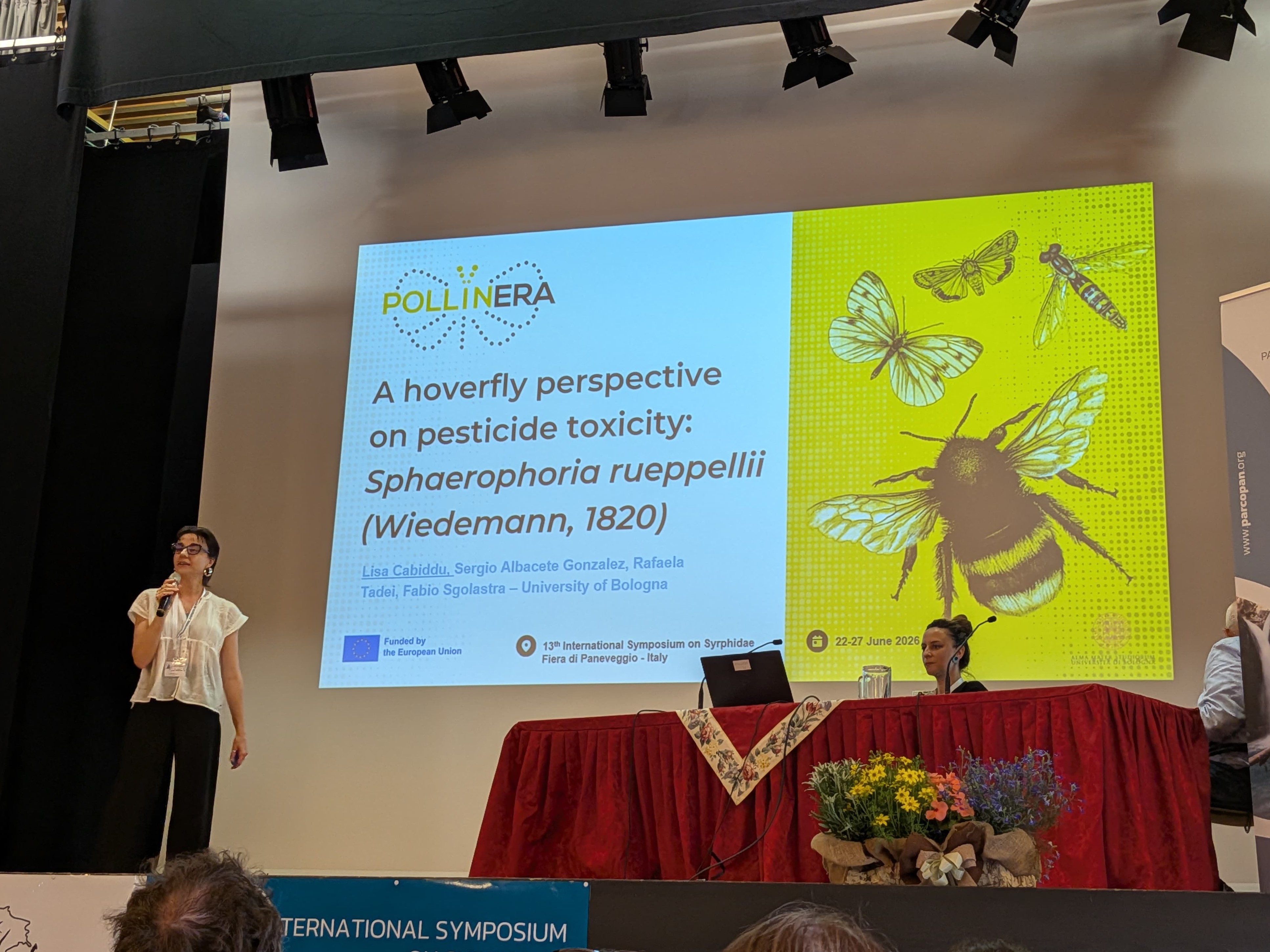 Lisa Cabiddu presenting at the International Symposium on Syrphidae
PollinERA’s work on the traits-based approach to determining species vulnerability to pesticides, as well as on the overall improvement of the evaluation of pesticide risks and impacts, continues. Follow us and stay tuned for exciting project results!