PollinERA project materials showcased at two key events this June
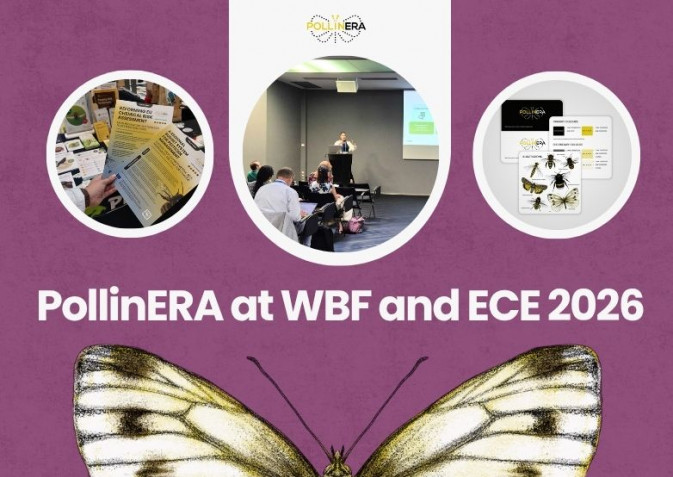
At the beginning of the summer, PollinERA attended two major events to raise awareness about its progress and to reach more experts in relevant fields.
The World Biodiversity Forum at Davos, Switzerland
The World Biodiversity Forum addresses challenges such as biodiversity loss and interconnected planetary crises that undermine planetary health and social justice. This year's edition, held between 14 and 19 June, and themed ‘Leading Transformation Together’, brought together international researchers, practitioners, companies and policymakers from a variety of disciplines and backgrounds.
The participants had the opportunity to learn about PollinERA through the project materials, displayed on the Pensoft Publishers' booth. Special emphasis was placed on PollinERA’s policy briefs "Reforming EU chemical risk assessment: from regulatory bottlenecks to systems solutions" and “A Regional Budget System for Pesticide Management: Systems-first environmental risk assessment: the case for change”.
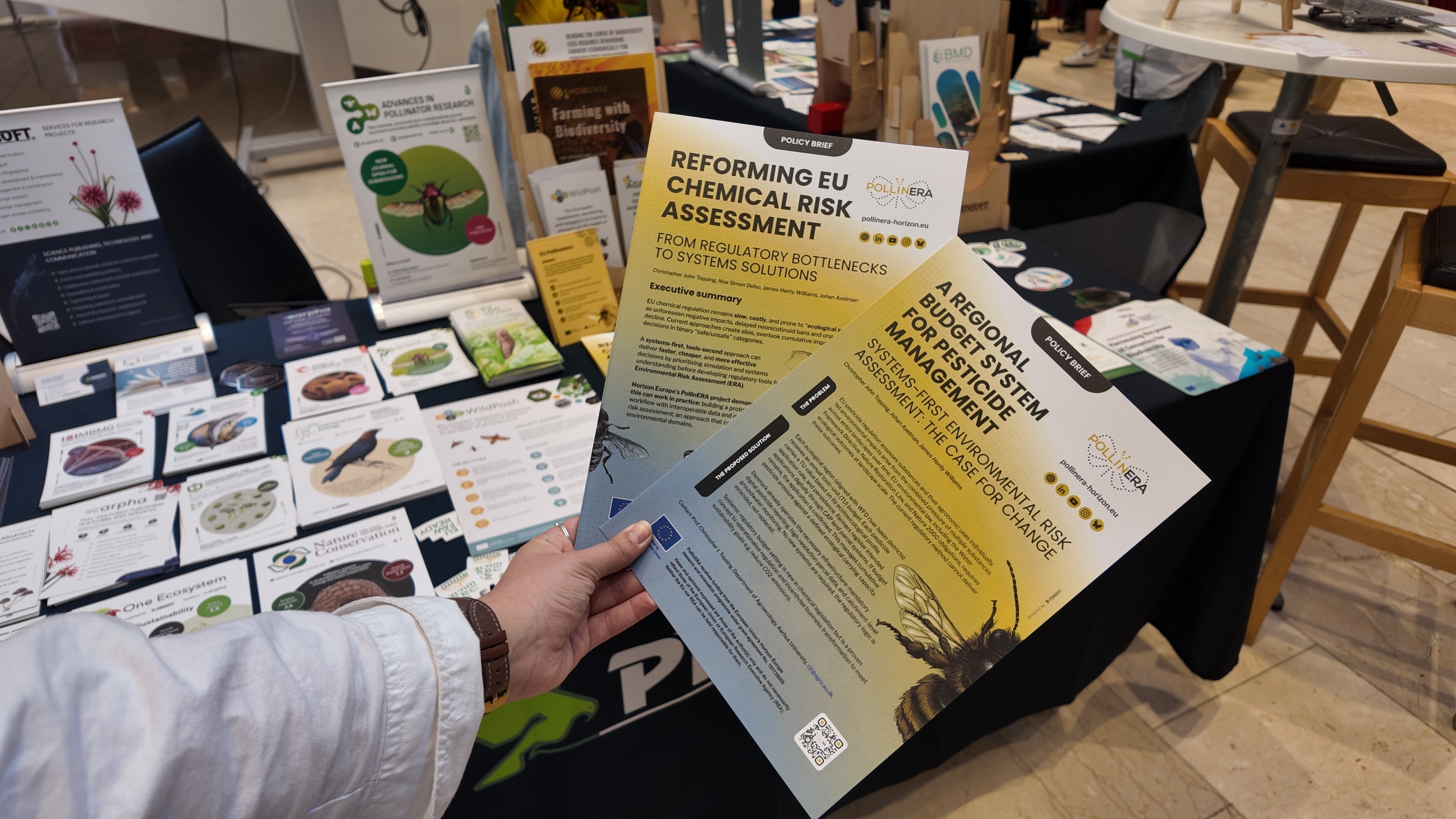
The PollinERA project policy briefs at the World Biodiversity Forum at Davos
XIII European Congress of Entomology 2026 in Tours, France
The XIII European Congress of Entomology brings together the international entomological community to share knowledge, foster collaboration and inspire future research. This year, between 29 June and 3 July, more than 1,400 entomologists and other members of the science community around the world gathered to discuss the latest research on insects' roles in ecosystems, agriculture and sustainability during a program packed with talks, symposia and poster sessions.
Throughout the congress, PollinERA was represented at the booth of the project communication partner, Pensoft Publishers, where participants could learn more about the project and browse some of the PollinERA promotional materials, along with both policy briefs. Explore PollinERA’s promotional materials online here.
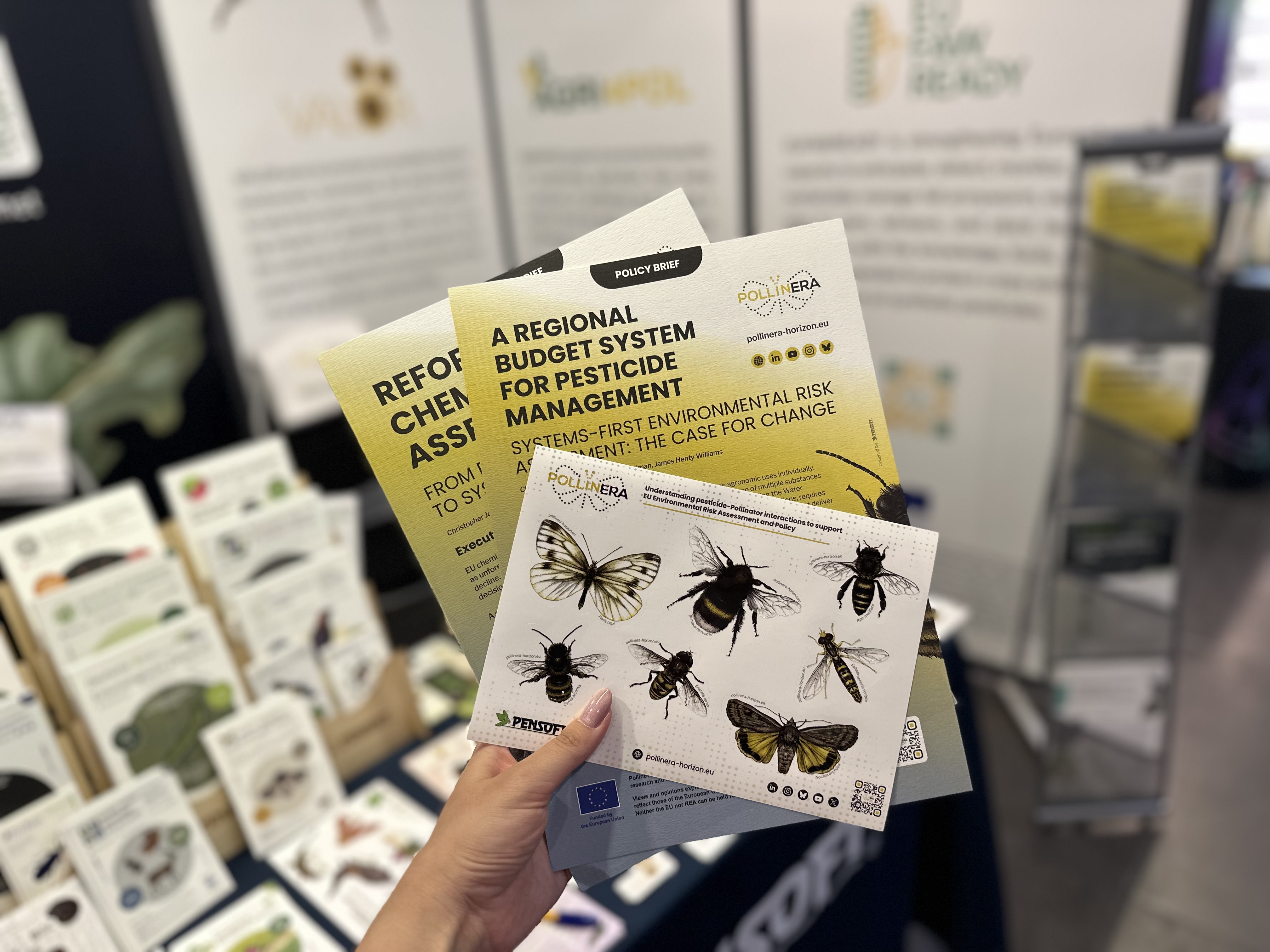 The PollinERA project materials at the XIII European Congress of Entomology
During the congress, project partner Carla Stoyanova (Pensoft, leader of PollinERA WP6: Communication, dissemination and exploitation) co-led a workshop together with Nikolay Mehandzhiyski (Pensoft, EUFAWREADY), "Tiny creatures, lasting impact: Science communication for entomology", exploring the fundamentals of science communication and its relevance in the context of EU-funded research projects, including PollinERA. The project was an example of effective strategic science communication through its visual identity, serving as the foundation for all project awareness-raising and results-oriented materials.
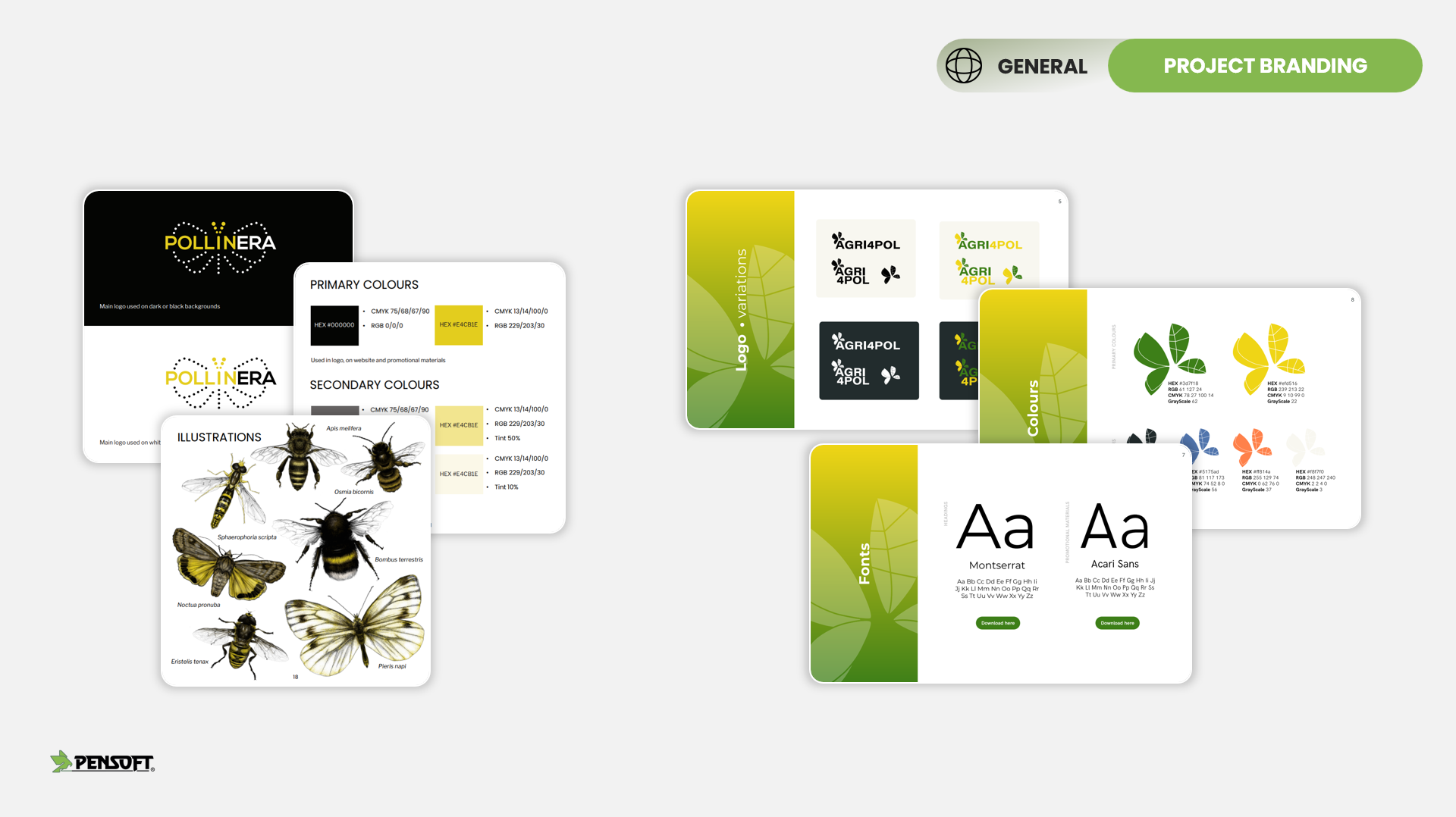
PollinERA presented at the science communication workshop "Tiny creatures, lasting impact: Science communication for entomology" at ECE 2026
Apart from the visual identity, PollinERA’s policy briefs, explanatory videos, and a scientific poster were also presented as examples of effective communication tools that transform scientific information into clear explanations and recommendations for specific audiences.
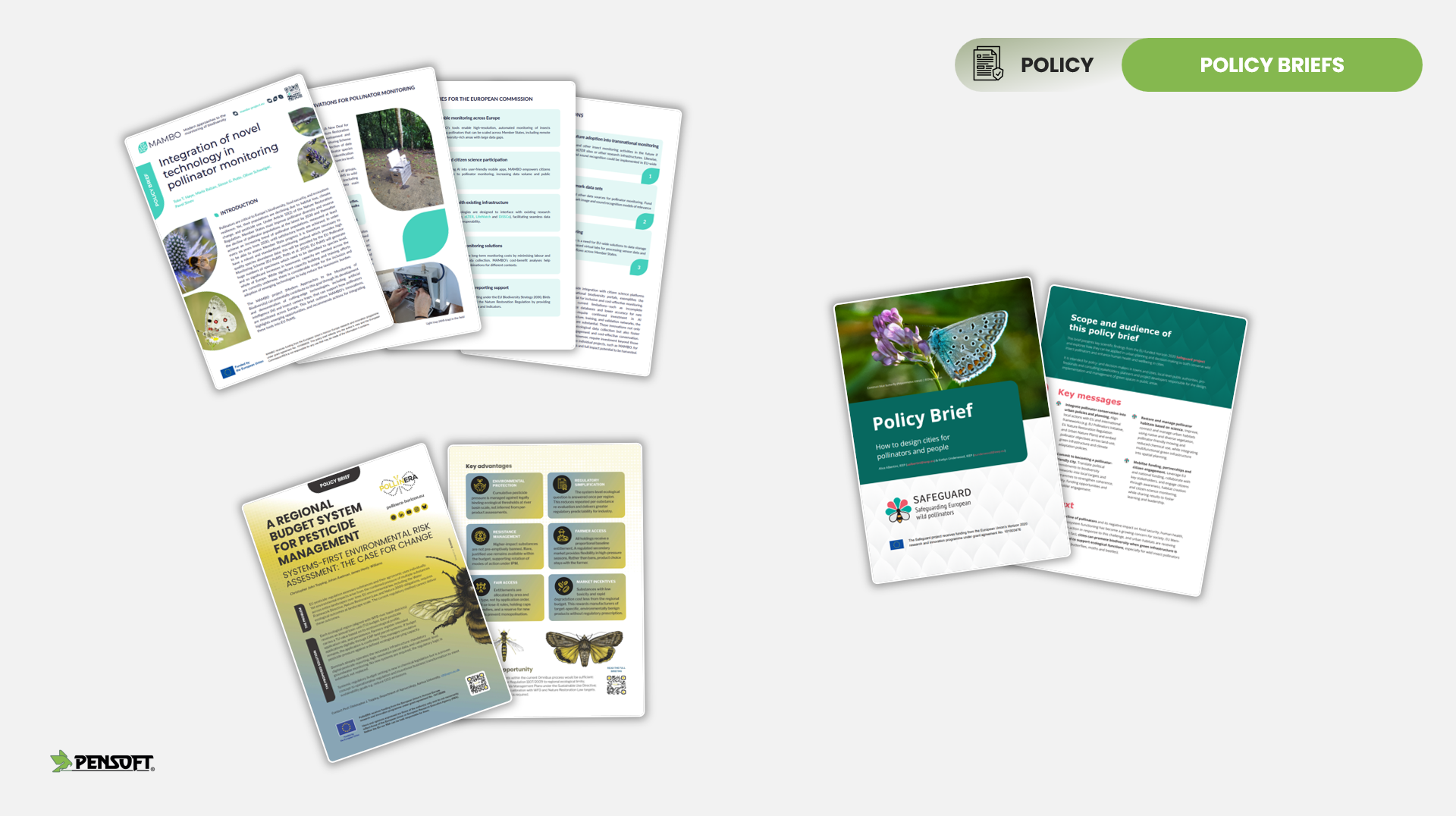
PollinERA videos showcased as an example of engagement method at ECE 2026
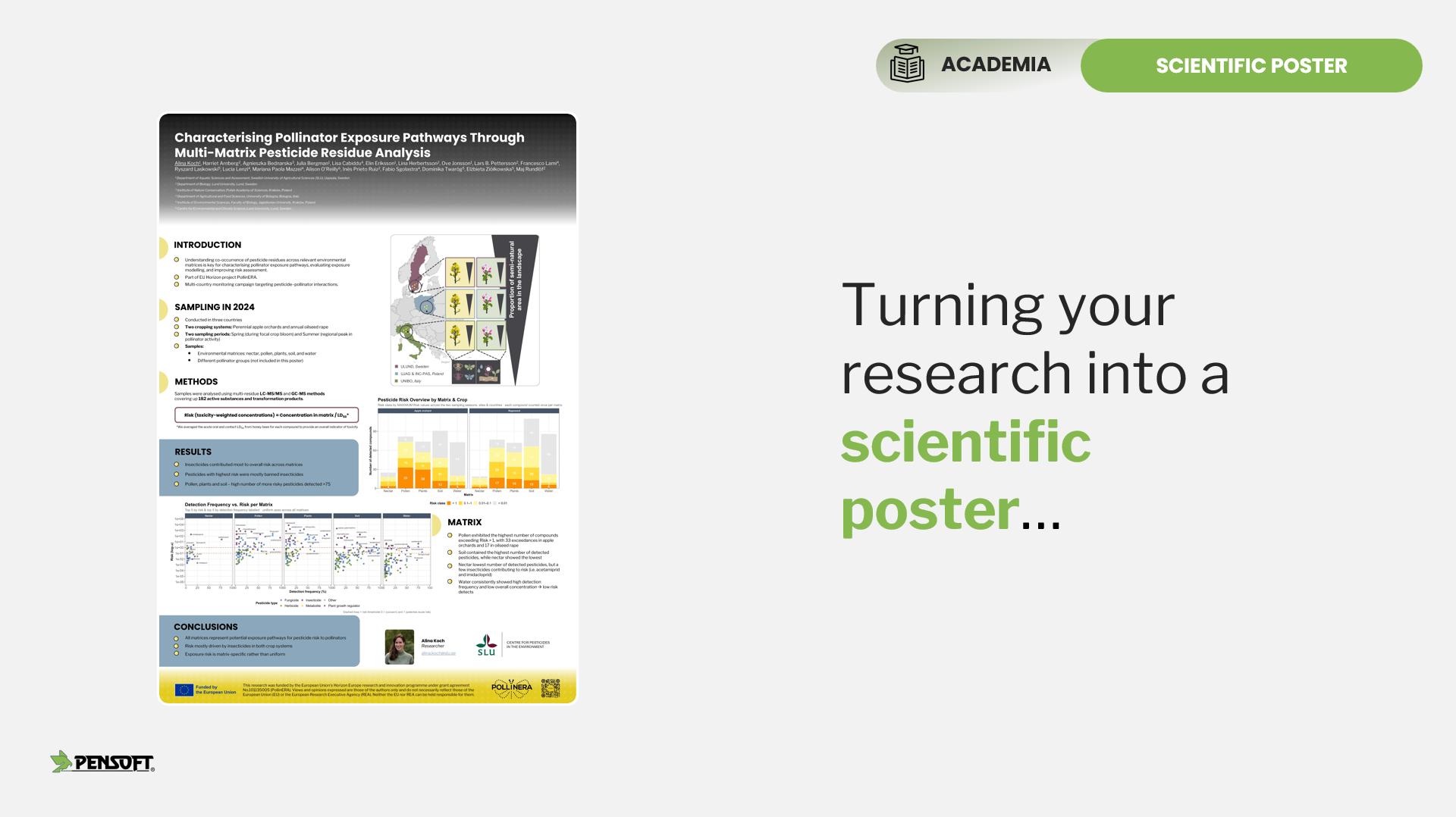 Scientific poster showcased as an example of engagement method at ECE 2026
During the congress, Sabrina Pesarini from the WildPosh project held a presentation titled: “Extending pesticide risk assessment beyond Apis mellifera: a trait-based vulnerability framework for wild pollinators”. The results were conducted with support from the PollinERA project (in the face of Fabio Sgolastra).
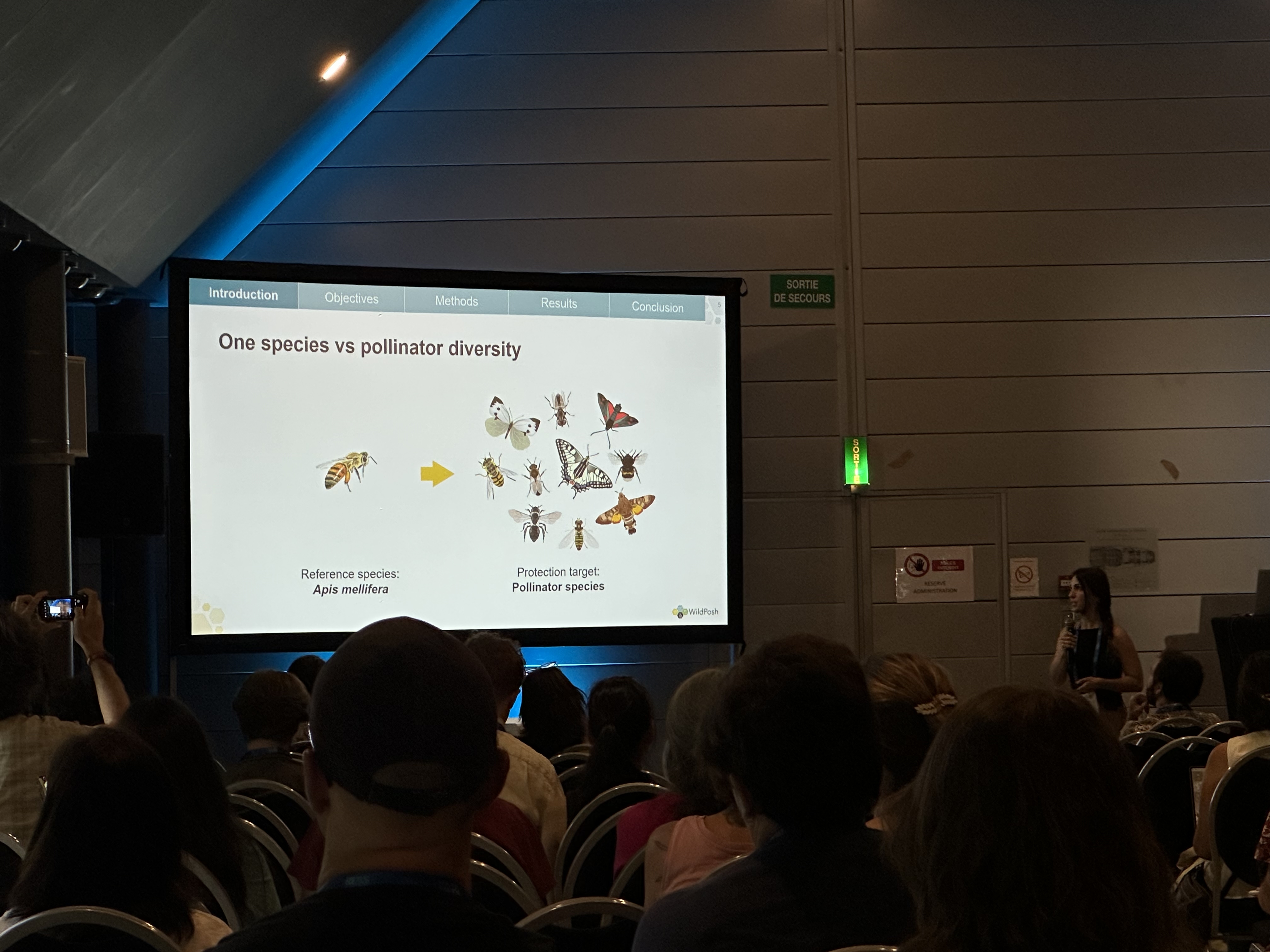 Sabrina Pesarini's presentation at ECE 2026, showing the diversity of pollinators
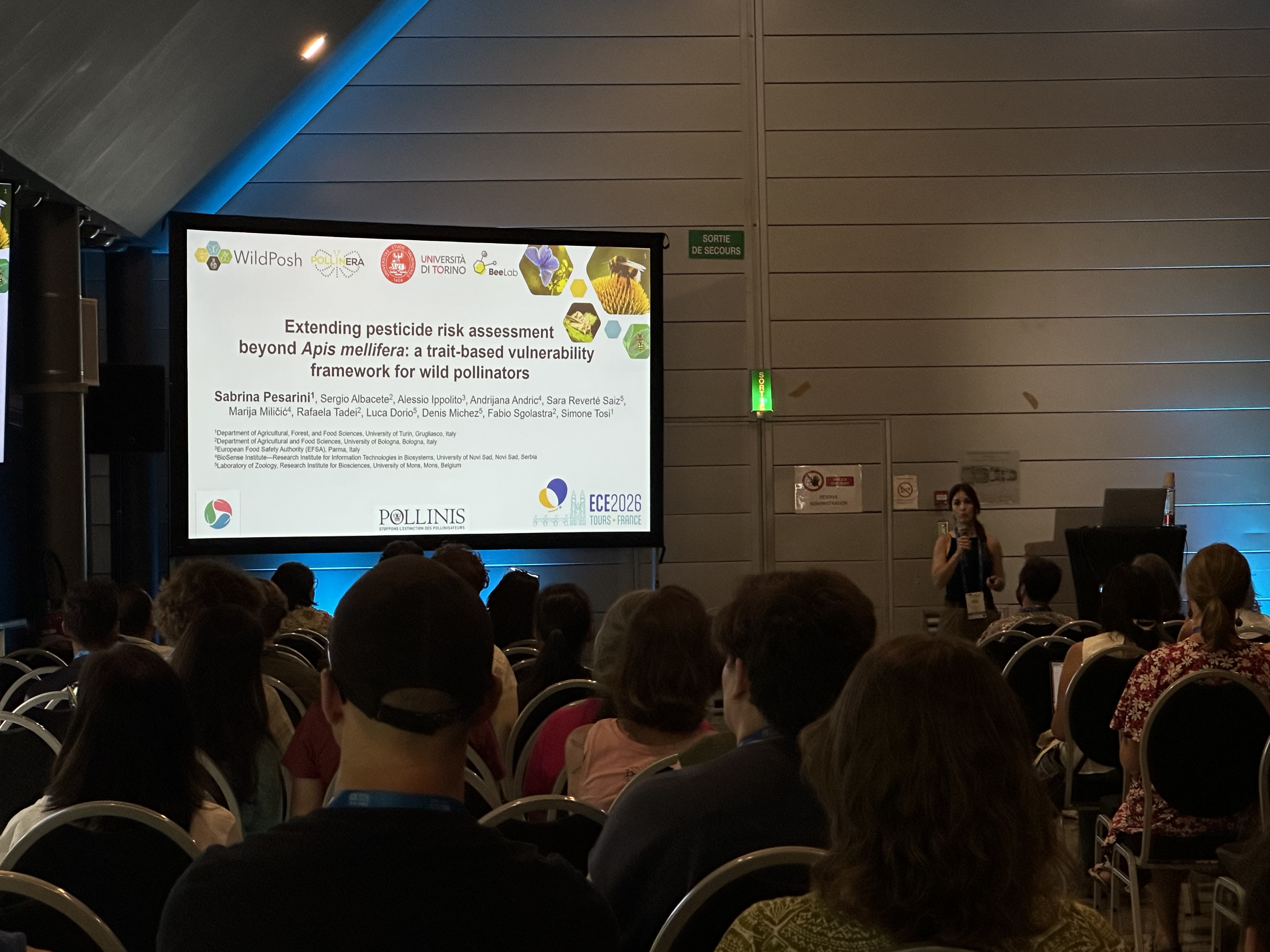 Sabrina Pesarini presenting about a trait-based vulnerability framework for wild pollinators
Participating in the World Biodiversity Forum and the XIII European Congress of Entomology helped the PollinERA project to reach new experts and enabled networking and the exchange of knowledge and ideas, which are key for the protection of pollinators.