Seven species, four pollinator groups: Meet PollinERA’s study subjects
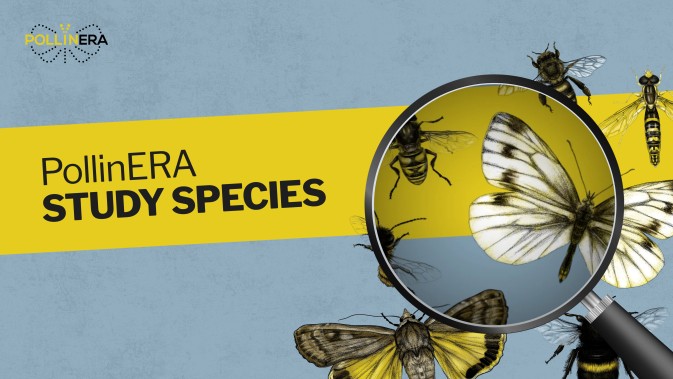
Not all insect pollinators are the same. Bees, hoverflies, moths and butterflies differ in their biology, behaviour, life cycles and interactions with the environment. Naturally, these differences also influence how they encounter pesticides and respond to chemical exposure. To understand pesticide impacts more comprehensively, research needs to look beyond a single species and consider the diversity of insect pollinators.
This is why the PollinERA project has selected seven insect species representing four major groups of pollinators: bees, hoverflies, moths and butterflies. Together, they provide a broader basis for investigating pesticide exposure and sensitivity across different types of pollinators.
The selection takes into account several important factors, including the species' ecological roles, distribution, biological characteristics and relevance to agricultural ecosystems. It also reflects existing gaps in pesticide risk assessment, particularly for pollinator groups that have received less scientific attention than honey bees.
By bringing these species into its research, PollinERA aims to expand the evidence base for pesticide risk assessment and contribute to approaches that better reflect the diversity of insect pollinators and their responses to environmental stress.
Curious to meet the seven species? Watch the video below, where we introduce our study species – from familiar bees to lesser-studied moths and hoverflies – and discover the pollinators helping to advance pesticide risk assessment.